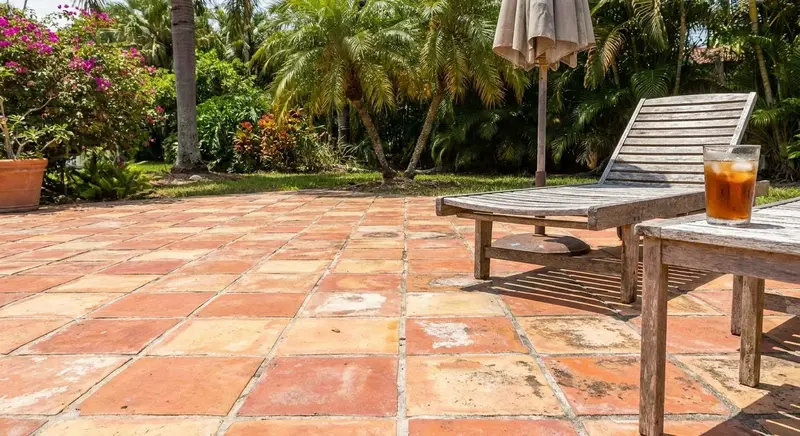
Sun, humidity and salt air strip color from outdoor tile faster than most homeowners expect. Here is why patio tiles fade in Broward County and how to slow it down.
Why Patio Tiles Fade in Broward County
Most homeowners treat patio tiles as set-and-forget. Pick a color, lay them down and enjoy the view. The Florida sun does not care what you paid or how good the tiles looked on install day. On the Broward County patios we clean, UV rays break down pigment while heat, humidity and salt air pile on top of that.
If your tiles look washed out or patchy, that is not bad luck. It is weathering in action. Every outdoor surface needs a defense plan. Every decision about materials or maintenance should account for what this climate does to surfaces left exposed.
UV Exposure Does Most of the Damage
The South Florida sun is relentless. When ultraviolet radiation hits tile day after day, it degrades the color compounds embedded in or applied to the material. That process is called photodegradation. It strips color and leaves dull, uneven tones that make a patio look older than it is.
UV does not work alone. Humidity speeds moisture penetration. Summer storms leave mineral deposits behind as puddles evaporate.
Coastal salt spray corrodes sealants and etches surfaces. Mold and algae work into porous materials and stain from the inside out. Together, these forces fade and weaken tiles faster than most people expect.
Location changes the mix. A patio a few blocks from the ocean catches salt on every onshore breeze, which is why patio cleaning in Lauderdale-By-The-Sea usually includes a sealer check. An inland pool deck mostly fights sun, algae and sprinkler stains.

Which Tile Materials Hold Their Color Outdoors
What you install matters. Some tiles resist fading far better than others, and knowing the difference can save you from early replacement.
- Porcelain and ceramic: High-quality porcelain with through-body color holds up well. Cheap ceramic with a surface-only glaze wears fast and exposes the base material to UV damage.
- Natural stone like travertine or slate: Beautiful but porous. Without proper sealing, it absorbs moisture and stains, which speeds discoloration under the sun.
- Concrete pavers: Durable, but only when the pigment is integral rather than surface-applied. Surface color fades quickly. Mixed-in color lasts.
- Terracotta styles: Warm and rustic, but highly vulnerable to UV and moisture unless sealed and maintained regularly.
How to Keep Patio Tiles From Fading
You cannot stop the sun, but you can slow the damage. In Broward County, that means being proactive, not reactive. The plan has three parts.
- Seal everything. A UV-resistant sealer adds a layer that blocks radiation and moisture. Reapply every one to two years depending on foot traffic and exposure.
- Clean regularly. Dirt, algae and mildew trap moisture and speed staining. Use non-abrasive cleaners and stay consistent.
- Manage drainage. Standing water eats through sealant and discolors grout. Make sure the patio slopes away from the house and water does not pool after afternoon storms.
A few more habits extend tile life. Add shade with pergolas, awnings or large umbrellas to cut direct UV. If you are installing new surfaces, choose porcelain, integral-color concrete or sealed stone rated for outdoor use.
Inspect the sealant every year. If water stops beading on the surface, the seal is breaking down, so reseal right away. Catch early discoloration while it is still treatable. Wait too long and you are replacing tiles instead of maintaining them.
What to Do When the Fading Is Already Done
If your patio already looks rough, you still have options. Start with a deep clean. Professional cleaning strips away surface buildup and often reveals brighter color underneath.
If that is not enough, staining concrete and some stone surfaces can refresh the look. Use exterior-grade products and prep the surface correctly.
Keep these points in mind as you decide:
- Pressure wash carefully. Too much pressure can damage grout or etch softer stone, so settings must match the material.
- Stain or paint strategically. Concrete takes stain well. Stone varies, so test a small area first.
- Hire pros for restoration. Cleaning and sealing stone require the right equipment and experience. DIY can make it worse.
- Replace selectively. If only certain sections are badly faded, swap those tiles instead of redoing the whole patio.
- Document before and after. If you file insurance or warranty claims, photos matter. Keep records of all maintenance and repairs.
Do not try to patch deep damage with sealant alone. It will not hold, and you will waste time and money.
Professional Patio and Outdoor Stone Restoration
Travertine, limestone, marble and slate respond well to professional natural stone cleaning followed by a fresh seal. Done right, it brings stone back close to its original condition. For pavers, concrete and outdoor tile, our pool deck, patio and driveway cleaning removes algae, mildew, rust stains and embedded dirt before sealing.
If a few tiles are cracked or too faded to save, single tile replacement fixes the problem area without tearing up the whole patio. Our before-and-after project photos show how much color a cleaned and sealed surface can recover.
Coastal properties need sealing more often than inland ones. A pool deck in Pompano Beach facing the Intracoastal takes far more salt than a patio in western Broward, and its maintenance schedule should reflect that.
Rainy Season, Algae and Storm Debris on Outdoor Tile
Fading is not only a sun problem. From June through October, afternoon storms soak patios almost daily. Water that sits in low spots carries minerals and organic matter into grout and porous stone. When it evaporates, it leaves a chalky ring or a dark stain behind.
Shaded corners stay damp longest. That is where green and black algae take hold, especially under pool cage screens and along north-facing walls. Algae roots into the surface texture and holds moisture against the tile, which speeds the breakdown of any sealer still in place.
Hurricane season adds another layer. Wind drives leaves, sand and debris across outdoor surfaces, and wet leaves left on pavers leave tannin stains that look like fading. Clear debris within a day or two after a storm. Rinse salt off coastal patios after strong onshore winds.
Irrigation matters too. Sprinklers fed by well water often spray iron-rich water onto pavers and tile, which leaves orange rust streaks. Aim heads away from hard surfaces where you can. Rust and tannin stains respond well to professional treatment when they are handled early.
Prevention Beats Repair Every Time
Faded tiles are not a mystery. They result from exposure, neglect or poor material choice. In Broward County, where sun and humidity never take a break, outdoor surfaces need a plan, not good intentions.
Seal them. Clean them. Shade them when you can.
If damage is already showing, act before it spreads. A patio is an investment. Treat it like one and it will hold up for years, while neglected tiles end up on a replacement list.
To bring faded patio tile back, book a patio visit with Surface Savers online or by phone at (561) 376-7362.
Frequently Asked Questions
How often should outdoor tile be sealed in Broward County?
Typically every one to two years for most patios. Coastal homes and full-sun pool decks may need it closer to once a year. Our pool deck and patio cleaning FAQ covers sealing and cure times.
Can cleaning bring back faded patio tile color?
Often, yes, at least partly. Much of what looks like fading is dirt, algae and mineral film sitting on the surface. A deep clean removes that layer. Color lost to UV inside the material will not return, but sealing slows further loss.
Is pressure washing safe for patio tile?
Yes, when the pressure matches the material. Too much pressure blasts out grout, chips edges and etches softer stone like travertine. Professional equipment lets technicians adjust heat and pressure for each surface.
When is the best time of year to seal a patio in South Florida?
Usually the cooler, drier months from late fall through spring. Lower humidity and fewer afternoon storms give sealer time to cure without rain interrupting it.
