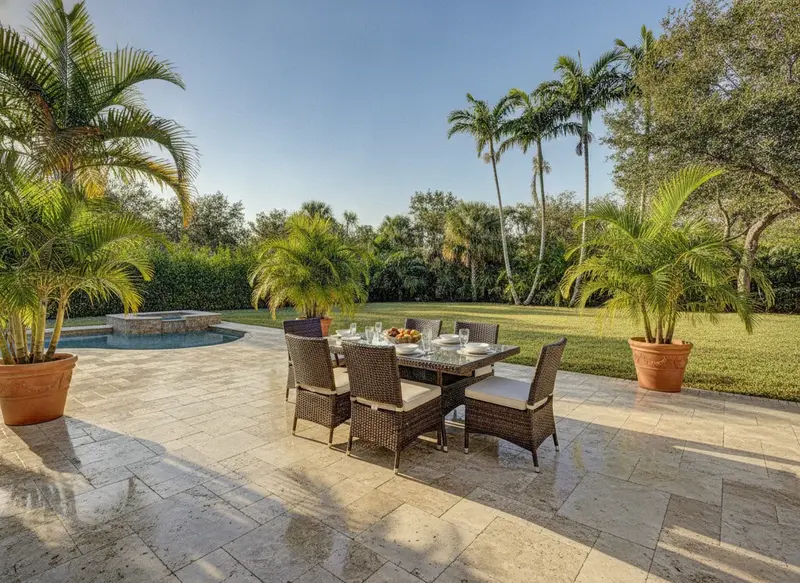
The summer heat is easing, the humidity is breaking and the rainy season is ending. That makes fall the ideal time to restore and protect patios, walkways and pool decks in South Florida.
Why Fall Is the Best Season for Outdoor Surface Restoration
Fall is the best time to clean and seal a patio in South Florida. The summer heat is easing, the humidity is breaking and the rainy season is coming to an end. That is why we steer homeowners in Palm Beach County and Broward County toward fall for restoring patios, walkways and pool decks.
Florida summers are hot, humid and rainy, which is the opposite of what outdoor restoration needs. Sealing pavers and natural stone, or applying any type of coating to an exterior surface, requires a dry surface, lower humidity and no rain in the forecast. Fall is when those conditions finally line up.
South Florida's rainy season generally runs from late May into October. Once it winds down, afternoon storms become rare and overnight lows drop. Pavers and stone that stayed damp for months can finally dry out all the way through, which is exactly what a sealer needs to bond properly.
What a South Florida Summer Does to Your Patio
Florida's summer elements are brutal on outdoor surfaces. By October, most patios and pool decks are carrying several months of damage that a garden hose will not touch.
- Sun fades color and breaks down sealer. Months of intense UV exposure bleach pavers, wash out stamped concrete and degrade whatever sealer was applied in past years.
- Rain and standing water feed growth. Daily storms leave puddles in low spots and joints, which create mold, mildew and algae.
- Humid air soaks into stone. Natural stone like travertine, limestone and coral stone absorbs moisture from the air, and stains travel in with it.
- Storms leave debris behind. Hurricane season runs through November 30, and wind-driven leaves, palm fronds and dirt break down on the surface and leave tannin stains.
By the time fall arrives, your outdoor spaces are ready for a professional cleaning to remove that built-up grime. Natural stone and pavers are usually ready for fresh sealing as well. Our pool deck, patio and driveway cleaning is built for exactly this end-of-summer reset.
Why Sealing Needs Dry Weather
A penetrating sealer works by soaking into the pores of the stone, paver or concrete and curing there. If those pores are still full of water, the sealer cannot get in. It sits on top, cures unevenly and can leave a cloudy or blotchy finish that has to be stripped and redone.
Rain on a freshly sealed surface causes the same problem. Most sealers need a window of dry hours after application before they can handle water. In July or August, that window is hard to find in South Florida. In late October and November, it is usually easy.
Lower humidity also helps the surface dry quickly after cleaning. After we clean a patio, the surface must be fully dry before any sealer goes down. Cooler, drier air shortens that wait and gives a more consistent result across the whole area.
Natural Stone and Pavers Need Extra Attention
Pool decks and patios across Palm Beach County and Broward County are built from a wide range of materials. Travertine, limestone, coral stone, concrete pavers, poured concrete and porcelain pavers all react to the climate differently.
Natural stone is the most porous of the group. Travertine around a pool absorbs chlorinated water, sunscreen and salt, and its open holes collect dirt and algae. Our natural stone cleaning and sealing uses methods that are safe for the stone, so the surface comes clean without etching or dulling.
Pavers bring their own issue: the joints. Sand between pavers washes out during heavy rain, and weeds and mold move into the gaps. A fall cleaning clears those joints, and sealing afterward helps lock the sand in place and keeps the color richer for longer.
How a Fall Patio Cleaning and Sealing Works
A proper outdoor restoration follows a set order. Skipping a step, or doing them out of sequence, is the most common reason a DIY sealing job turns cloudy or peels within a season.
- Walk the area. We look at the material, the stains, the shaded corners where algae grows and any loose pavers or cracked stone.
- Pre-treat. An eco-friendly, biodegradable cleaning solution goes down first to loosen dirt and treat mold, mildew and algae.
- Clean with pressure set for the surface. Pavers and concrete handle more pressure than soft stone like travertine, so the setting changes with the material.
- Flush the joints. Paver joints and stone pores are rinsed so debris is removed instead of pushed deeper.
- Let it dry. The surface must be completely dry before sealing, which is where fall weather helps most.
- Seal. A penetrating sealer is applied evenly and given time to cure before foot traffic and pool use resume.
The result is a surface that looks cleaner and holds up longer against the next rainy season. Sealed pavers and stone shed water, resist new stains and are easier to rinse clean between professional visits.
Fall and Winter Are Prime Time for Outdoor Entertaining
In South Florida, fall and winter are the seasons we actually spend outside. The holidays are approaching, family may be flying in, and backyard barbecues are comfortable again instead of sweltering. You want your outdoor spaces looking their best when guests arrive.
A clean, sealed patio also changes how the space feels underfoot. Algae and mildew make pool decks slick, especially in shaded corners. Removing that growth before a season of gatherings makes the area safer for kids and barefoot guests.
Many of our customers in Wellington and the coastal neighborhoods of Pompano Beach book their outdoor cleaning in October and November for this reason. They get the surface restored and sealed before the busiest stretch of the social calendar.
What Fall Restoration Includes
So, are you ready to clean and seal your outdoor natural surfaces? Surface Savers specializes in the services that bring a summer-worn outdoor space back:
- Patio and pool deck cleaning and restoration
- Natural stone sealing
- Mold and mildew removal
- Tile and grout cleaning, indoors and out
Many homeowners pair their outdoor work with indoor floors, since the same summer humidity affects grout inside the house. Our tile and grout cleaning for South Florida homes can be scheduled on the same visit. You can browse before-and-after results in our tile and patio cleaning photo gallery.
Schedule Your Fall Restoration Now
Do not let the dry season slip past. Once the calendar fills with holiday plans, the best weather windows for sealing get booked quickly. We serve homeowners and businesses across Palm Beach County and Broward County.
You can request a free patio cleaning quote online, or contact Surface Savers with questions about sealer timing. To grab a dry-season date right away, call (561) 376-7362.
Frequently Asked Questions
Why is fall better than summer for sealing pavers in South Florida?
Fall is better because sealer needs a dry surface, lower humidity and no rain for a period after it is applied. In summer, daily storms and high humidity keep pavers and stone damp. Fall brings drier air and fewer storms, so the sealer can penetrate and cure evenly.
Do I need to clean my patio before it is sealed?
Yes. Sealing over dirt, algae or mildew locks those contaminants under the coating. The surface has to be cleaned thoroughly and allowed to dry completely before any sealer goes down.
Can you clean my pool deck and indoor tile on the same visit?
Yes, in many cases. Outdoor surfaces and indoor tile and grout can often be handled in one appointment. Mention both areas when you request your quote so we can plan the visit.
Which outdoor surfaces do you clean and seal?
Most hardscape around a home: patios, pool decks, walkways and driveways made of pavers, concrete and natural stone such as travertine and limestone. We also handle mold and mildew removal and natural stone sealing.
How soon can I use my patio or pool deck after it is sealed?
Usually once the sealer has cured, and we will tell you on the day of service when the area is ready for foot traffic, furniture and pool use. Every sealer has its own cure time, and humidity affects it. Drier fall weather usually shortens the wait.
