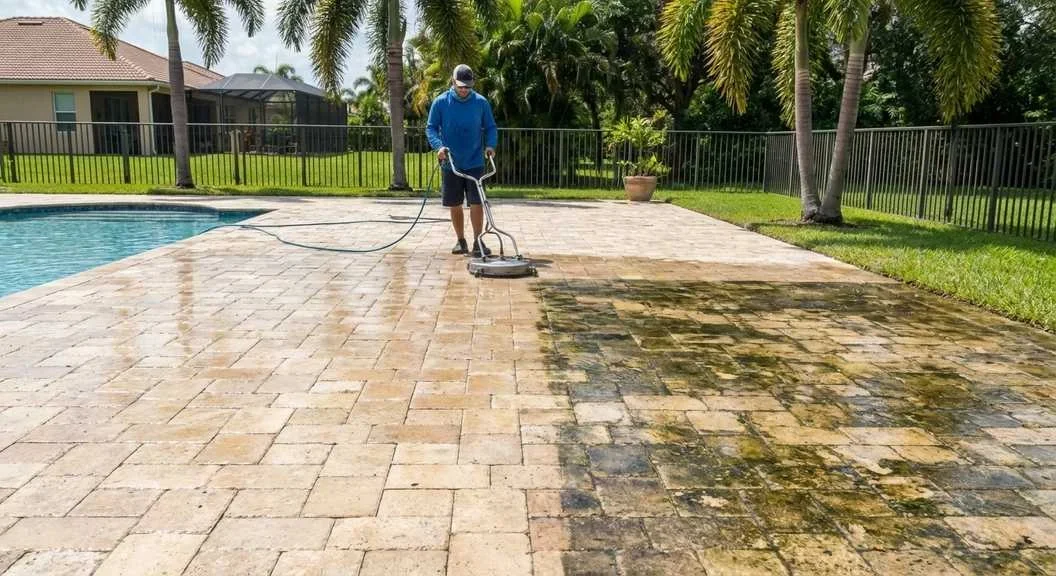
A quick rinse is not enough for a pool deck in Palm Beach County. Humidity, salt air and constant sun turn decks into a home for algae, mold and stubborn stains.
A Quick Rinse Is Not Enough in Palm Beach County
Most homeowners think pool decks just need a quick rinse now and then. Spray it down, let it dry, move on. On the Palm Beach County decks we clean, that approach invites trouble.
Humidity, salt air and relentless sun turn a deck into a breeding ground for algae, mold and stains. Every rainstorm, every ocean breeze and every kid dripping chlorinated water adds to it. If you do not stay ahead of it, you end up with slippery surfaces, permanent discoloration and repairs that could have been avoided.
The Palm Beach County Climate Works Against Your Deck
Palm Beach County humidity rarely drops to comfortable levels. Add summer afternoon thunderstorms that roll in like clockwork, and you have a recipe for organic growth. Algae needs only moisture, warmth and a porous surface, and a pool deck checks every box.
Then there is salt. Even away from the ocean, the air carries enough salt to leave a residue. Salt speeds up wear, eats away at sealers and makes stains stick harder. Add sand, pollen and debris from palm trees and live oaks, and your deck is handling more than most surfaces were designed for.
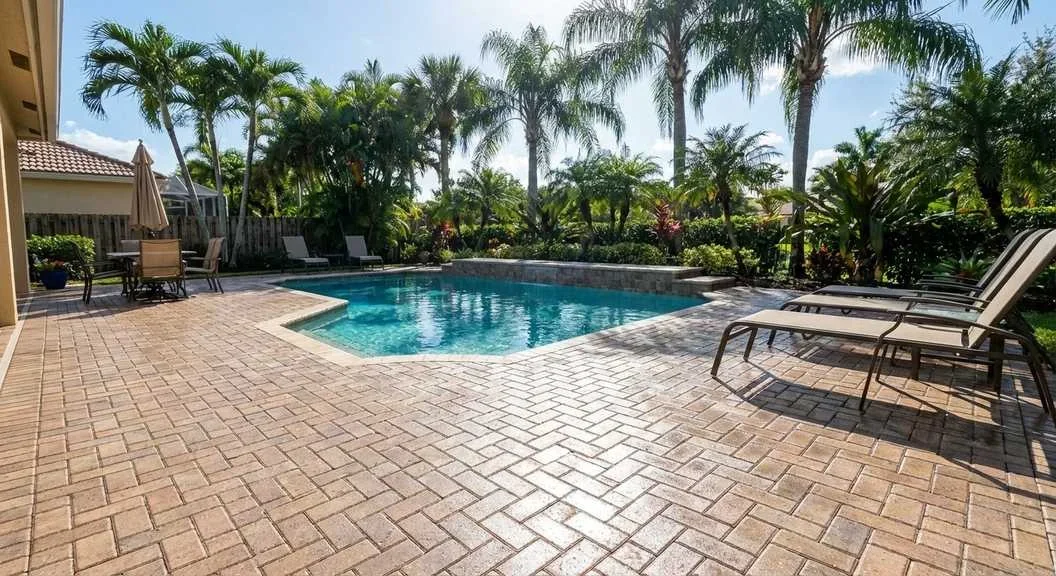
Slippery Surfaces Are a Safety Risk
Algae and mildew do not just look bad. They make the deck a hazard. Kids running around the pool, guests walking barefoot and you stepping out in the morning are all at risk when the surface gets slick.
Many homeowners ignore the early signs: a little green tint here, a slick patch there. By the time it is obvious, the growth is embedded. Once algae takes hold in the pores of concrete or between pavers, a garden hose will not move it. You need pressure, the right cleaning agents and a method built for this climate.
What Standard Cleaning Misses
A bottle of bleach and a scrub brush may feel productive, but they do not solve the root issue. Surface cleaning removes what you can see. It does not address what is growing underneath or what keeps the buildup coming back.
Our pool deck cleaning in Palm Beach County uses methods designed for this environment. That means pressure set correctly for the material and eco-friendly, biodegradable cleaners that treat mold without harming landscaping. Equipment reaches into cracks and joints where moisture hides.
Pool Deck Materials Matter More Than You Think
Not all pool decks are created equal, and they do not respond to cleaning the same way. The approach that works for stamped concrete might damage travertine. Pavers need attention at the joints. Here is how common materials hold up in Palm Beach County:
- Concrete absorbs moisture and stains easily, making it a prime target for algae and discoloration.
- Pavers look great but trap debris in the joints, where mold loves to grow.
- Natural stone like travertine is porous and needs sealing to resist salt and organic buildup.
- Wood decks face rot and mildew if they are not treated and cleaned regularly.
- Composite materials resist some issues but still collect grime and can develop slippery films.
Travertine and other stone decks need a gentler touch than concrete. Our natural stone cleaning for travertine and limestone cleans the stone without etching it.
Why DIY Pool Deck Cleaning Falls Short
Pool deck cleaning here is not a quick weekend project with a rented pressure washer and a video tutorial. Too much pressure etches the surface or forces water into cracks. Too little wastes your time.
Chemicals are the other issue. The wrong cleaner can damage the deck, kill plants or leave residue that makes the problem worse. A professional knows which products suit your material and how to apply them safely. They also spot early damage, like cracks, loose pavers and failing sealer, that is easy to miss.
How Often a Pool Deck Should Be Cleaned
If you wait until the deck looks dirty, you are already behind. In Palm Beach County, we recommend professional cleaning at least twice a year. Clean more often if the deck sees heavy use or sits under trees. A realistic schedule looks like this:
- Weekly sweeping to remove leaves, sand and debris before they break down.
- Monthly rinsing with a hose to clear surface buildup.
- Quarterly checks for early signs of algae, stains or damage.
- Professional cleaning and treatment twice a year.
- Annual resealing for porous materials like concrete and natural stone.
More scheduling details are in our pool deck and patio cleaning FAQ.
What Professional Pool Deck Cleaning Delivers
A professional service is more than spraying water on a deck. It starts with assessing the material, then follows a process that cleans without causing damage:
- Pre-treatment to loosen embedded dirt and treat organic growth.
- Pressure cleaning at the correct setting for your deck material.
- Joint cleaning for pavers to remove trapped debris and slow weed growth.
- A post-cleaning inspection to catch damage or areas needing repair.
- Optional sealing to protect the surface and extend the time between cleanings.
Sealing Adds a Layer of Defense
Cleaning removes the problem, and sealing helps keep it from coming back. On concrete, travertine and many pavers, a quality sealer creates a barrier against moisture, salt and stains. It will not make the deck invincible, but it makes future cleaning easier.
Sealers need reapplying every one to three years, depending on the product and how much wear the deck gets. The deck must be thoroughly cleaned before sealing. Trapping dirt and algae under a fresh coat defeats the purpose.
Red Flags That Cleaning Is Overdue
Some signs are obvious and others stay subtle until they are not. Schedule a cleaning if you notice any of these:
- Green or black streaks that will not rinse off with a hose.
- Slippery spots, especially after rain or in shaded areas.
- Discoloration that is spreading or getting darker.
- Visible mold or mildew in joints or cracks.
- A musty smell near the deck, even when it is dry.
Choosing a Pool Deck Cleaning Service
Not every pressure-washing company understands Palm Beach County pool decks. You want someone who knows the climate, the materials and the methods that work here. Ask about experience with your type of deck, the products they use and whether they offer sealing.
A good service walks the property, explains what they see and gives you a clear plan. They will not blast everything at high pressure. Homeowners from Boca Raton to Delray Beach trust us with travertine, paver and concrete decks.
Maintenance Between Professional Cleanings
What you do between visits matters too. Sweep or blow off debris weekly. Rinse the deck after pool parties to clear chlorine and sunscreen residue, and spot-clean stains as soon as you see them.
Trim plants and trees that drop leaves or create shade where moisture lingers. Check for cracks or loose pavers and address them before water gets in.
Pool decks here face conditions that demand more than casual maintenance. To protect your outdoor space, book a free pool deck cleaning quote, message our outdoor cleaning team or call (561) 376-7362 today.
Frequently Asked Questions
How often should a pool deck be professionally cleaned in Palm Beach County?
Most homes need it at least twice a year. Decks under trees, in heavy shade or with frequent pool use may need cleaning more often to keep algae and mildew under control.
Is pressure washing safe for travertine pool decks?
Yes, when the pressure and cleaning solutions are right for travertine. Too much pressure or harsh chemicals can etch or pit the stone. Natural stone should be cleaned with methods made for stone and sealed afterward.
Why is my pool deck slippery?
Usually it is a thin layer of algae, mildew or sunscreen and chemical residue. Professional cleaning removes the growth and film, which restores the surface texture.
Should I seal my pool deck after cleaning?
Yes, sealing is recommended for porous materials like concrete, pavers and natural stone. It resists moisture, salt and stains and should be reapplied every one to three years.
