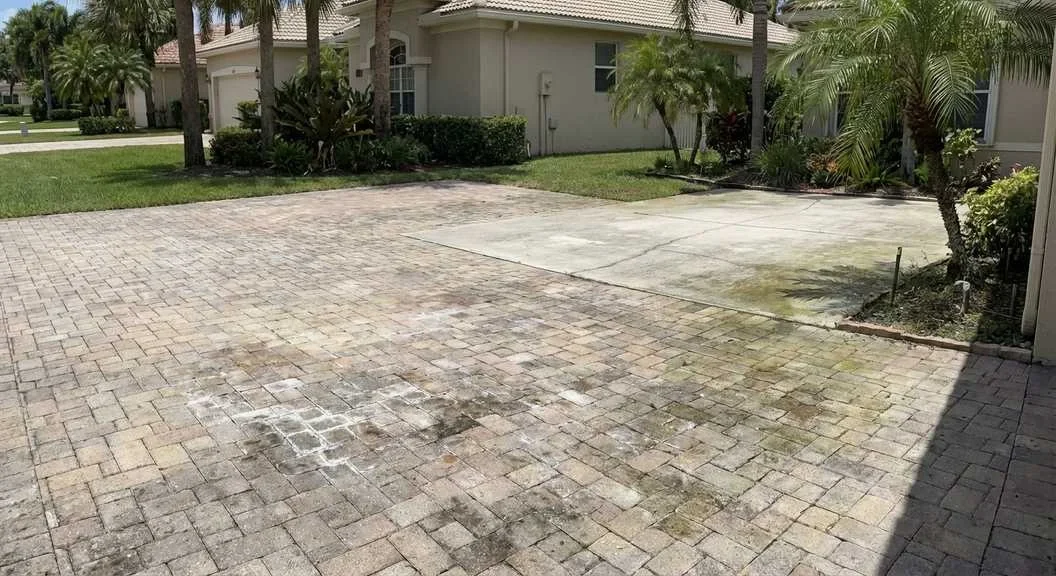
Driveways and patios do not fade just because they are old. They fade because Palm Beach County throws sun, rain, salt and traffic at them all year long.
Fading Is Not Just a Sign of Age
Most homeowners think fading is just part of owning outdoor surfaces. The sun hits it and the color goes away. When we clean driveways and patios, we find more happening beneath the surface.
Driveways and patios do not fade just because they are old. They fade because Palm Beach County throws everything at them, all year long. Every rainstorm leaves a mark, every UV ray breaks down another layer, and every month you ignore it makes the next fix harder.
UV Rays in Palm Beach County Do Not Take Days Off
Palm Beach County sits under strong sun nearly every day of the year. That is great for the beach and hard on your driveway. UV radiation breaks down the pigments and sealers that give concrete and pavers their color.
Darker colors fade faster because they absorb more heat. Lighter tones show chalking and dullness. Once the top layer starts breaking down, the damage speeds up. What looked fine six months ago can be washed out by the end of summer.
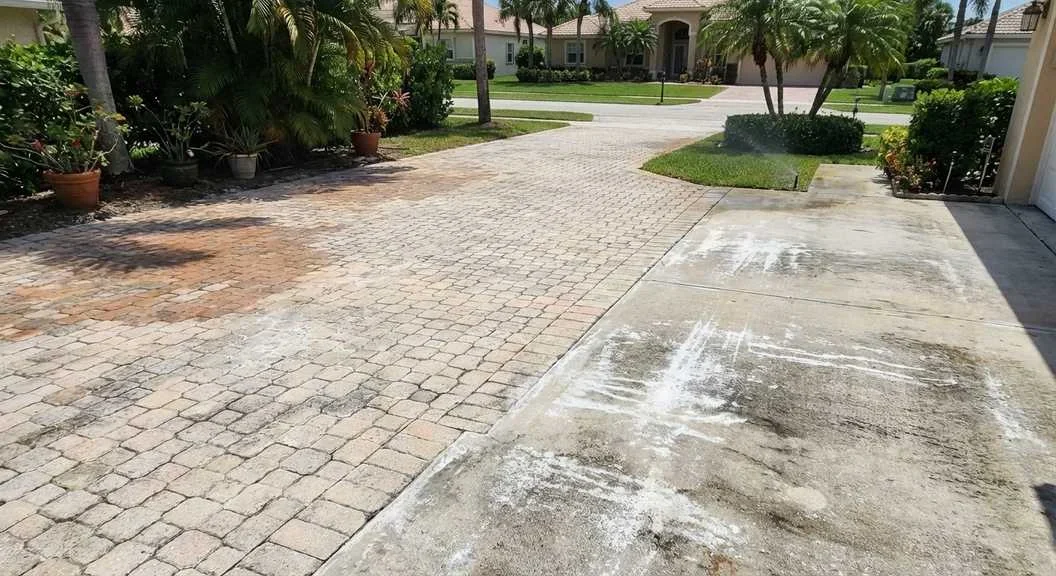
Rain and Humidity Team Up
Summer storms bring heavy rain. Water seeps into porous surfaces and pulls pigment and fine particles with it as it drains. The more water gets in, the weaker the surface becomes.
High humidity makes it worse. Moisture settles into every crack and joint, creating the perfect conditions for mold, mildew and algae. Those organisms stain as they grow: green streaks, black patches and brown spots that hide the original color.
Our driveway and patio cleaning in Palm Beach County removes that growth with pre-treatment and pressure set for the material. That is the first step to seeing what color is still there.
Salt Air Eats Away at Outdoor Surfaces
Living near the coast has perks, but your driveway does not enjoy them. Salt from ocean breezes settles on concrete and stone, and it is corrosive. Over time it pulls minerals out of the surface and leaves efflorescence, the white powdery residue you see on older driveways.
Efflorescence is a sign the surface is breaking down. Salt speeds up erosion, dulls color and makes the material more porous. Once that happens, water, dirt and stains get in more easily.
Coastal homes notice this first, but salt reaches well inland on windy days. Natural stone patios made of travertine or coral stone are especially sensitive, and our natural stone patio cleaning and sealing helps them resist it.
Traffic Wears Down the Top Layer
Driveways and patios take a beating. Cars roll over them, bikes skid across them and feet track in dirt. All that friction wears away the sealer and pigment layer and exposes raw material underneath.
Oil leaks and tire marks soak in rather than sitting on top. On pavers, shifting and settling create uneven spots that trap grime. The more traffic, the faster the color fades.
Chemicals Do More Damage Than You Think
Fertilizers, pesticides, pool chemicals and cleaning agents all end up on or near your driveway and patio at some point. Those products can react with the surface, causing stains or bleaching out color.
Even a spilled cleaning solution can leave a permanent mark if it is not rinsed quickly. Pool decks that border a patio take extra chlorine and salt-system splash. Regular exposure to harsh chemicals speeds up the breakdown, especially in a climate this aggressive.
Low-Quality Materials Show Their Age Fast
Not all concrete and pavers are equal. Low-quality materials might look fine at installation but are not built for Florida's climate. Inferior sealers break down faster, cheap pigments fade quicker and very porous surfaces let water in more easily.
Poor installation makes it worse. If the base was not properly prepared or the sealer was not applied correctly, the surface starts from a weak position. Quality materials and careful installation hold up longer and look better doing it.
Skipping Maintenance Costs You Later
Most homeowners do not think about the driveway until it looks bad. By then, the damage is done. Sweeping off debris, professional cleaning a few times a year and resealing when needed all preserve color and extend the life of the surface.
Without maintenance, the driveway is exposed to sun, rain, salt, chemicals and traffic all at once. Once the color is gone, getting it back takes more work. Prevention is easier than restoration every time.
What Actually Protects Your Driveway and Patio
Keeping outdoor surfaces sharp does not take a complicated plan, just consistent action:
- Apply a UV-resistant sealer every couple of years to block sun damage.
- Have the surface cleaned regularly to remove mold, algae and contaminants.
- Rinse off chemicals and spills immediately before they soak in.
- Repair cracks and chips as soon as they appear to keep water out.
- Use quality materials from the start so you are not fighting an uphill battle.
When DIY Is Not Enough
Some fading is surface-level and responds to a good cleaning and fresh sealer. If the color loss is deep or uneven, or comes with cracking and erosion, the problem is bigger.
A professional can assess the surface, recommend the right treatment and apply products that work in this climate. They can also spot underlying issues like drainage problems or base failure. Homeowners in Lake Worth and Sandalfoot Cove often call us after a season of DIY pressure washing leaves streaks behind.
Pavers, Concrete and Stone Fade Differently
Not every outdoor surface loses color the same way, and the fix depends on the material.
Concrete pavers usually fade from the top down. The pigment in the surface layer wears off under sun and tires, and the joints fill with dark algae. Cleaning the paver faces and joints, then sealing, restores much of the depth.
Poured and stamped concrete tends to blotch. Oil stains, rust from sprinklers and mildew create uneven patches across a single slab. Natural stone like travertine and coral stone rarely loses pigment, but it absorbs stains and turns gray or green with growth. Stone responds well to gentle cleaning followed by a penetrating sealer.
What Happens If You Wait
Ignoring fading hurts more than curb appeal. Once the protective sealer is gone, water gets in. Once water gets in, cracks form, and once cracks form, the surface starts breaking apart. What could have been a simple reseal can turn into a full replacement.
Replacement means tearing out old concrete or pavers, prepping the base, installing new material and sealing it. Most of that can be avoided with routine care.
Color Loss Is Preventable
Driveways and patios in Palm Beach County face tough conditions, but they do not have to look worn out. With the right materials, regular maintenance and a little attention, outdoor surfaces can hold their color and stay strong for years.
Our driveway and patio cleaning gallery shows the difference professional treatment makes. When you are ready, get a free driveway cleaning quote, contact our driveway cleaning crew or call (561) 376-7362 and let us bring back your curb appeal.
Frequently Asked Questions
Why is my paver driveway turning white?
Usually it is efflorescence, a white, powdery residue. Salt and moisture pull minerals to the surface of concrete and pavers. Cleaning removes it, and sealing helps slow it from returning.
How often should a driveway be sealed in South Florida?
Usually every couple of years for most driveways and patios. Surfaces with heavy sun exposure or traffic may need resealing sooner.
Can faded pavers get their color back?
Often, yes. Much of what looks like fading is dirt, mold and algae covering the original color. Professional cleaning and a fresh sealer can bring back a richer look, although deep UV fading cannot be fully reversed.
What causes rust-colored stains on my driveway?
Usually iron, either from irrigation water with high iron content or from metal furniture and planters. They soak into concrete and pavers, so they need targeted treatment rather than pressure alone.
